Long Reach vs Standard Excavator: Which One Does Your Job Need?
Choosing between a long reach and a standard excavator usually comes down to one question: how far and how deep do you actually need to dig? Pick the wrong one and you either pay a premium you didn't need, or you mobilise a machine that physically can't reach the work. This guide breaks down the real differences so you book the right unit the first time.
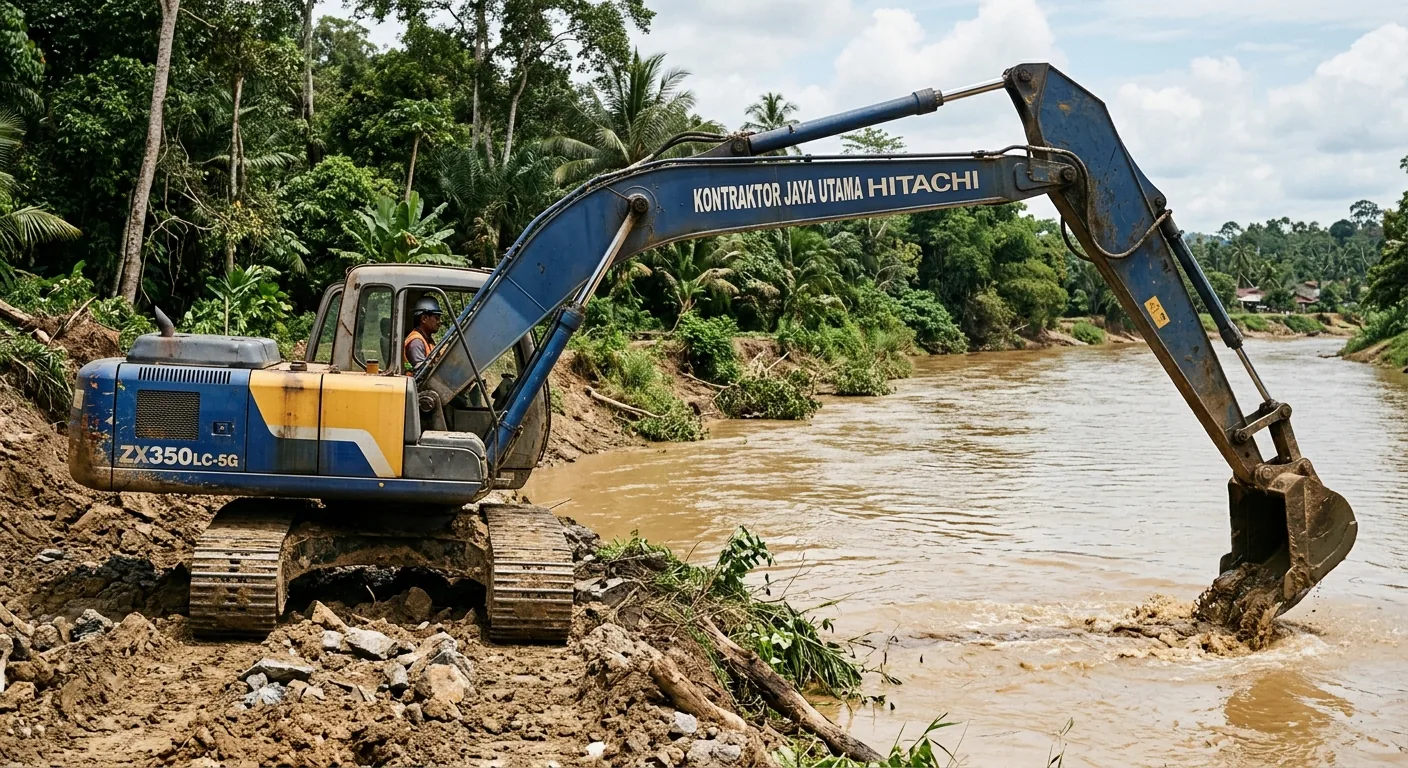
At a Glance
| Long Reach | Standard | |
|---|---|---|
| Class / weight | 20 tonne and up | 7–20 tonne |
| Working reach | Roughly 15–20m horizontal, sometimes more | Roughly 8–10m horizontal |
| Dig depth | Deep — suited to dredging and below-grade work | Standard trench and foundation depths |
| Lifting capacity | Lower at full extension (long arm trades power for reach) | Higher — short arm gives more breakout force |
| Stability | Needs firm, level ground; longer arm shifts the load | More stable and forgiving on tighter setups |
| Best jobs | River dredging, deep excavation, bridge and slope works | Construction, demolition, general earthworks, trenching |
| Bucket size | Smaller bucket to keep the long arm balanced | Larger buckets for higher production |
| Day rate | From RM2,500–4,000/day | From RM1,500–2,500/day |
| Mobilisation | Heavier load, may need extra transport planning | Easier to transport and position |
The core difference: reach and depth vs power
A standard excavator (7–20 tonne) is the workhorse of most sites. Its arm is built for production: a shorter boom and dipper that move a lot of material quickly, dig firm trenches and foundations, and lift with real force. Working reach is typically around 8–10m horizontally, which comfortably covers everyday construction and earthworks.
A long reach excavator (20 tonne and up) trades that brute force for distance. By fitting a longer boom and arm, it can reach roughly 15–20m out and dig much deeper — but the longer the arm, the less it can lift at full stretch and the more carefully it has to be set up. In short: standard means power and speed up close; long reach means getting to work you simply can't touch with a normal machine.
Stability and ground conditions
Reach comes at the cost of balance. When a long reach excavator extends its arm fully, the load sits far from the machine's centre of gravity, so it needs firm, level ground and careful positioning to stay safe. On soft, sloped or uneven ground, that long arm becomes a liability rather than an asset.
A standard excavator is far more forgiving. The shorter arm keeps loads closer to the body, so it stays stable on tighter, less perfect setups and can work confidently right up against structures and edges.
This is why ground assessment matters before you book a long reach. If you're dredging from a riverbank or working near water, the bank has to support the machine — and in genuinely soft or waterlogged conditions, an amphibious excavator on a pontoon undercarriage is often the smarter choice than a long reach parked on unstable ground.
Lifting capacity and bucket size
If your job involves lifting — placing pipes, shifting concrete sections, handling rock — the standard excavator usually wins. Its shorter arm gives more breakout force and higher lifting capacity, and it runs a larger bucket for faster production.
A long reach runs a smaller bucket on purpose. The long arm has to stay balanced, so loading it with a big, heavy bucket would compromise stability and lifting safety. That means lower output per pass — the trade-off you accept in exchange for the distance.
The practical takeaway: don't rent a long reach to move a lot of material over a short distance. You'll dig slower and lift less than a standard machine would, for a higher rate.
The cost premium — and when it's worth it
A standard excavator typically runs from RM1,500–2,500/day. A long reach starts from RM2,500–4,000/day, and its heavier weight can add to mobilisation and transport planning. So you're looking at a meaningful premium per day, plus potentially higher delivery costs.
That premium is worth it only when reach or depth is the deciding factor. If a standard machine physically can't get to the work — the far side of a pond, the bottom of a deep cut, over a barrier — then the long reach isn't optional and the cost is simply what the job requires.
But if a standard excavator can reach the work, paying long-reach rates buys you nothing except slower digging and less lift. The cheapest correct answer is almost always the smallest machine that can safely do the job.
Which jobs justify a long reach
Some work genuinely needs the extra arm. River and pond dredging, where you sit on the bank and reach across and down into the water, is the classic case. Deep excavation below normal grade — basements, deep drainage, foundations on sloping sites — often exceeds what a standard arm can reach.
Bridge works, slope stabilisation and reaching over walls, barriers or existing structures also fall into long-reach territory, because the value is the distance you can cover without repositioning or driving onto sensitive ground.
Here's a quick checklist — if you tick one or more of these, a long reach is likely the right call:
Use this to sense-check your booking before you commit to the higher rate.
- You need to reach more than ~10m horizontally to the work
- You're digging well below normal trench or foundation depth
- You're working across water — dredging, river or pond edges
- You need to reach over a wall, bank or obstacle you can't drive past
- Repositioning a standard machine repeatedly would be slow or unsafe
How to brief us so you get the right machine
You don't need to know the model — you just need to describe the job. The three things that decide long reach vs standard are: how far out you need to reach, how deep you need to dig, and what the ground is like where the machine will sit.
Tell us those, plus roughly how much material you're moving and whether you need lifting, and we'll match the smallest, most cost-effective machine that does it safely. All our operators are CIDB-certified (Green Card), and we offer same-day or next-day delivery across all 16 states, with weekly and monthly packages for longer jobs.
If it turns out your site is soft or waterlogged rather than just far, we'll flag that too — sometimes an amphibious unit is the right answer, not a long reach. The goal is one mobilisation that works, not a second machine after the first one can't cope.
Our Verdict
For most jobs, a standard excavator is the right call. It digs faster, lifts more, sits more stably and costs noticeably less per day — and the 8–10m reach covers the vast majority of construction, demolition, trenching and earthworks. Only step up to a long reach when the geometry of the job genuinely demands it: you're dredging a river or pond from the bank, excavating well below normal grade, working across water, or reaching over an obstacle you can't drive past or onto. In those cases the extra reach isn't a luxury, it's the only way the work gets done, and the cost premium is justified. If you're unsure, tell us the reach distance, the dig depth and the ground conditions — we'll spec the smallest machine that can safely do the job, which is almost always the cheaper one.