Long Reach Excavator: Extended Reach, Jobs & Rental Cost in Malaysia
When a standard machine simply can't reach far enough — across a river, down a deep cut, or up a long slope — the long reach excavator is the tool that closes the gap. This guide explains what it is, the typical reach figures, the jobs it handles best, the stability rules that keep it safe, and what it costs to rent in Malaysia.
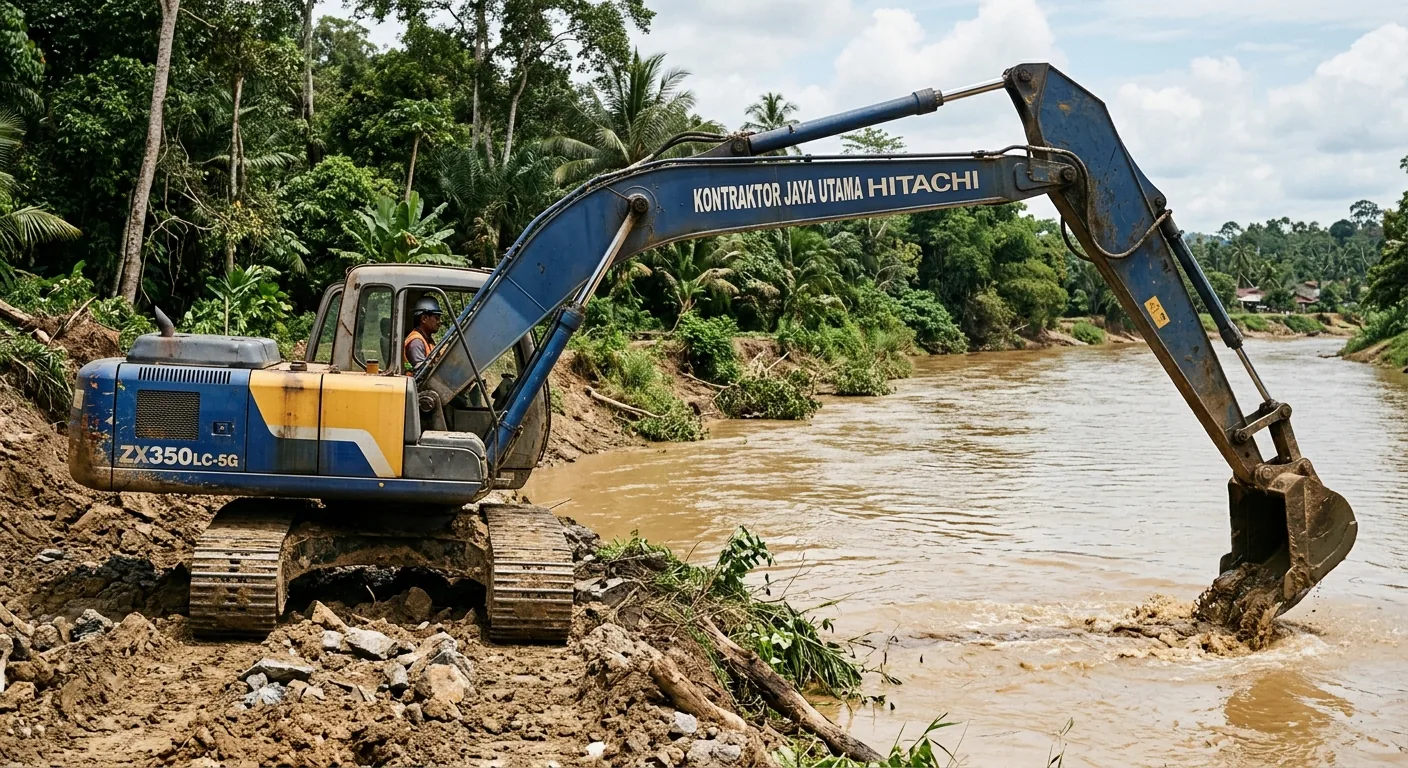
What a long reach excavator actually is
A long reach excavator (often called a long arm excavator) is a standard tracked excavator fitted with an extended boom and arm. Instead of the normal dipper and boom, it carries a longer two- or three-piece arm that trades digging power for distance. The base machine is usually a 20 tonne or larger excavator, because you need that weight and track length to stay stable once the arm is stretched out front.
The trade-off is straightforward. A long reach setup lets the operator dig or clear material far from where the machine is parked, but it lifts and breaks with less force than a standard arm of the same class. That is fine for the work it is built for — reaching, scraping, dredging and shaping — and less suited to heavy rock breaking or deep, hard digging, where a standard excavator earns its keep.
Because the arm is purpose-built, you generally hire a machine that is already configured as long reach rather than converting one on site. Tell us the reach you need and the ground you're working on, and we'll match the right unit.
Typical reach figures to expect
Reach depends on the size of the base machine and the arm fitted, so treat these as typical ranges rather than fixed numbers. On a 20 tonne class long reach excavator, you can usually expect a horizontal reach in the region of 15 to 18 metres and a digging depth of roughly 11 to 14 metres. Larger base machines push those figures further.
The bigger units — 30 tonne and up — can reach further still, with some specialised arms stretching beyond 20 metres horizontally and digging well past 15 metres deep. The longer the arm, the lighter the bucket and the load it can safely handle, because everything is a balance between reach and stability.
When you ask for a quote, the most useful thing you can tell us is the distance and depth you actually need to hit — for example, the width of the channel you're dredging or how far down a slope you need to clear. We size the machine and arm to that, rather than over-renting a unit you don't need.
The jobs a long reach excavator is built for
The whole point of the extended arm is to work where the machine cannot get close to the material. That makes it the default choice for water-edge, slope and deep-excavation work across Malaysia, from drainage schemes in the Klang Valley to river works in the east coast states.
Common jobs include the following:
For genuinely waterlogged or swampy sites where even the bank won't hold a machine, an amphibious excavator on a pontoon undercarriage is often the better tool — it floats and works from the water itself. The long reach unit is the right choice when you have firm ground to park on but the material is simply too far away to reach with a normal arm.
- River and canal dredging — clearing silt and debris from the bank without putting the machine in the water
- Deep excavation — digging basements, deep drains, retention ponds and foundations below the reach of a standard arm
- Slope and embankment shaping — cutting and grading long or steep slopes from stable ground at the top or bottom
- Bridge and over-water works — reaching out over the water line for piling support, abutment clearing and channel maintenance
- Soft-ground reaching — working at the edge of a swamp, pond or flooded site where the machine itself must stay on firm ground
Stability and safety — why setup matters
A long reach excavator carries its load further from the machine's centre, so stability is the single most important thing to get right. The further the arm extends, the more the load wants to tip the machine forward, which is why these units are built on heavier, longer-tracked bases with the boom geometry to match.
On site, the operator works within a safe load chart and keeps the machine on firm, level ground — especially close to water, soft edges and excavation lips, where the bank can give way under the tracks. Positioning matters: the machine should sit far enough back from a slope crest or channel edge that the ground beneath it stays solid even at full reach. This is exactly where an experienced operator pays for himself.
All our operators are CIDB-certified (Green Card), which is the standard requirement for operating plant on Malaysian sites. They know how to read the ground, manage the swing and work the machine within its limits, which keeps both the crew and the equipment safe.
A few practical points worth raising before mobilisation: tell us the ground conditions at the working position, whether you're near water or an unsupported edge, and how much swing room the machine has. Those details let us send the right machine and brief the operator properly, rather than discovering a problem on the day.
Long reach excavator rental cost in Malaysia
Long reach excavators sit at the upper end of the rental range because of the size of the base machine and the specialised arm. As a guide, expect rates from around RM2,500 to RM4,000 per day, depending on the size of the machine, the reach required and the length of hire.
On top of the daily machine rate, there are two costs worth budgeting for. An operator add-on typically runs from about RM150 to RM300 per day — and for long reach work, an experienced operator is strongly recommended rather than optional. Mobilisation (delivery and collection) starts from around RM500 in the Klang Valley and is distance-based elsewhere, so a job in a more remote location will carry a higher transport cost.
If the work runs for more than a few days, ask about weekly and monthly packages. They usually work out noticeably better value than day-rate, which matters on a machine in this class. Same-day or next-day delivery is generally available depending on fleet availability and your location.
The most accurate way to price your job is to share the basics with us — the reach and depth you need, the site location, and roughly how many days. Send those over on WhatsApp and we'll come back with a clear quote, including operator and mobilisation, so there are no surprises.
Choosing the right machine for your site
Picking the right excavator is mostly about matching the machine to the distance, the ground and the duration of the work. If the material is close and the digging is heavy, a standard excavator is faster and stronger. If the material is far away but you have firm ground to park on, the long reach excavator is the answer. If the ground itself won't carry a machine, look at an amphibious unit instead.
If you're not sure which way to go, that's exactly what we're here for. Describe the job — what you're moving, how far, how deep, and where the site is — and we'll recommend the machine that does it safely and economically, without pushing you toward a bigger unit than you need.
When you're ready, message us on WhatsApp with your site details and dates, and we'll arrange the machine, a CIDB-certified operator and delivery to suit your schedule.